For many of us, it is well-known how climate change has influenced wildfires, floods, and rising sea levels. Natural disasters caused by climate change have become common across the world. But have you ever wondered if climate change has anything to do with the most unpredictable and dangerous natural disaster — earthquakes?
In today’s article, we will explore how earthquakes actually occur and whether climate change has any influence on them. We will also examine some case studies and research to uncover if there is any direct or indirect connection between climate change and earthquakes.

How Do Earthquakes Happen?
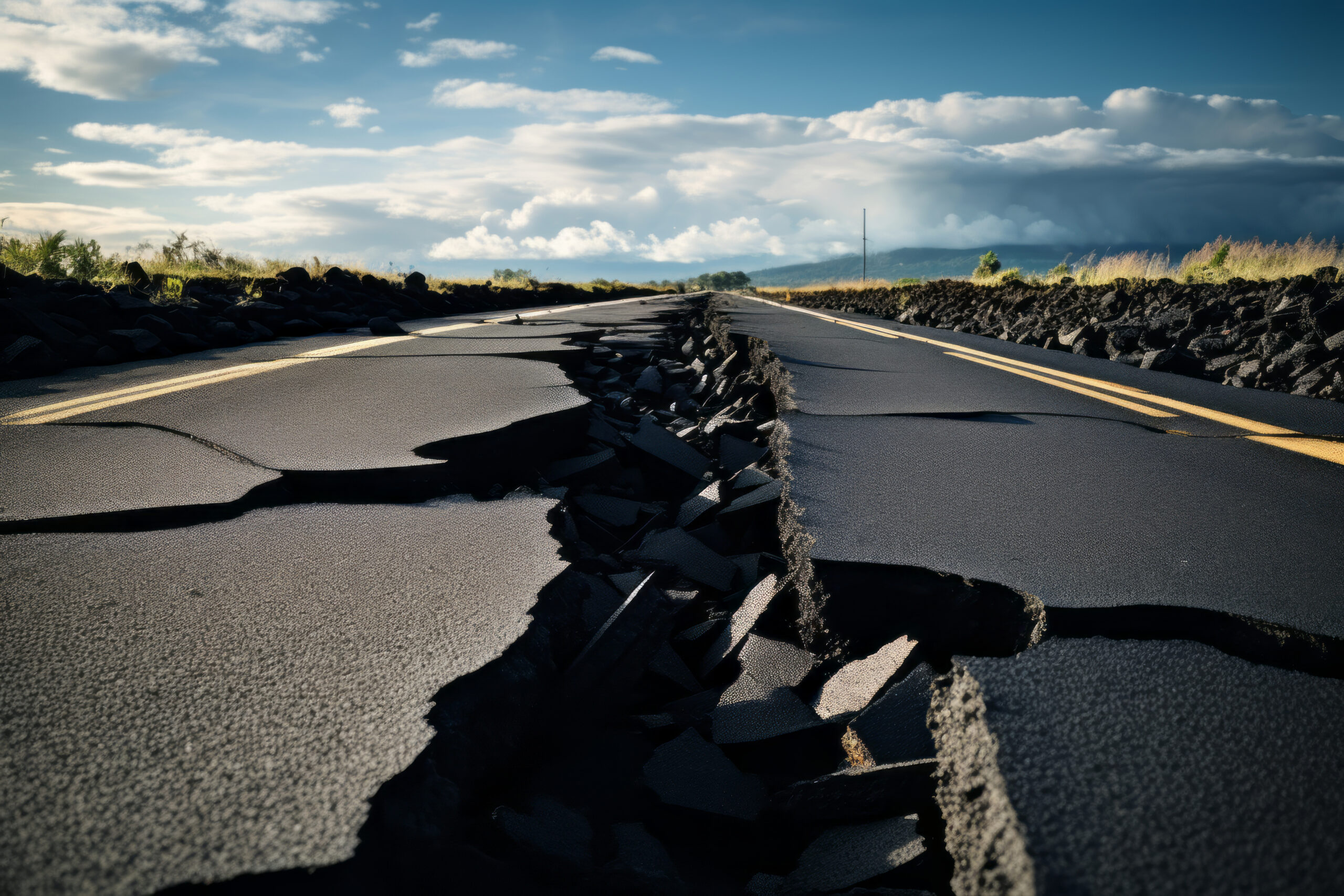
Earthquakes are among the most common natural disasters. Every day, more than 9,000 quakes occur around the world. These quakes may last only a few seconds but can destroy entire cities.
Let’s understand in simple terms how an earthquake happens. First, we need to know that the Earth’s top layer, also known as the crust, is made up of seven large and many smaller tectonic plates. Beneath the crust is the mantle. Due to convection currents in the Earth’s mantle, the plates move and float like sheets of ice. These plates shift a few inches each year.
As they move, friction builds up between them, creating enormous pressure. When this tension is suddenly released with a strong jolt, the Earth shakes — this is what we feel as an earthquake. This movement mainly occurs at the edges of tectonic plates. For example, the Pacific coast of Japan is where four plates meet, making it a hotspot for frequent earthquakes.
Earthquakes are measured using the Richter scale. A magnitude above 5 on the Richter scale can cause damage to cities and regions. Apart from tectonic earthquakes, there are also other natural causes such as volcanic earthquakes and collapse earthquakes.

How Can Climate Change Influence Earthquakes?
Many researchers have investigated whether climate change can impact earthquakes. Several hypotheses and case studies support the idea that climate change may influence seismic activity. Let’s take a look at the key ways climate change can affect seismicity, based on current research.
1. Intense Rainfall
During the monsoon season, regions like Nepal experience intense rainfall, which increases surface load on the Earth’s crust. The massive weight of accumulated water presses down on the crust. When the monsoon ends and the water drains or evaporates, the crust rises slightly again. This loading and unloading cause the Earth’s crust to rise and fall by several centimetres.
This vertical movement alters stress levels on major faults, such as the Main Himalayan Thrust. Sometimes the stress is reduced, delaying earthquakes, and at other times it increases, potentially triggering them. While climate change may not directly cause earthquakes, it can intensify monsoon patterns and influence seismic activity by shifting stress on active faults.
2. Droughts
Droughts can also influence the timing and location of earthquakes. When surface water is reduced during droughts, the Earth’s crust rises. When heavy rains return, the added water weight makes it sink again. In the Sierra Nevada, a case study showed that mountains have been observed to rise during droughts and sink after heavy rainfall.
This rise and fall create vertical movement, changing how stress is distributed along underlying faults. In some cases, this can “unclamp” faults, reduce friction, or increase shear stress — all of which affect the likelihood of an earthquake.
3. Glacier Melting
Climate change has significantly impacted glaciers, which are melting rapidly and contributing to rising sea levels. Glaciers are extremely heavy and exert immense pressure on the Earth’s crust. As they melt, this pressure is lifted — a process known as glacial isostatic rebound.
As the weight is removed, the crust begins to rise, sometimes by several centimetres per year. This shifting of mass changes the stress and strain in the crust and upper mantle. The reduction in pressure can activate ancient or dormant faults, allowing them to slip and release energy as earthquakes.
Scientists have observed similar events in Greenland. Due to global warming, glaciers there are melting rapidly, and a rise in glacier-driven earthquakes has been recorded since the early 2000s. These observations have led scientists to recognize a link between industrialization-driven climate change and its connection to seismic activity.
4. Oil and Gas Extraction
A major contributor to climate change is the extraction of oil and gas from the ground. This process also impacts earthquake activity. Hydraulic fracturing (fracking) and conventional drilling generate large amounts of wastewater. Instead of being treated, this wastewater is often injected deep into the ground through wells, known as injection wells.
When wastewater is injected near fault zones, it reduces the clamping force that holds fault surfaces together. If a fault is already under stress, this sudden reduction in friction can cause it to slip, resulting in an earthquake.
For example, Oklahoma, USA, once experienced a dramatic rise in seismic activity — over 900 earthquakes measuring above 3.0 in a single year. Investigations revealed a strong correlation between this increase and the rise in wastewater injection. After regulations were introduced to limit injection volumes and target high-risk wells, the number of earthquakes dropped significantly.

Conclusion
From the case studies and scientific observations, it is clear that while climate change may not directly cause earthquakes, it can influence their occurrence over time. Earthquakes are natural disasters that cannot be entirely prevented or predicted. However, we can take steps to reduce the contributing factors.
Reducing our daily carbon footprint is essential. The small, conscious choices we make each day can reduce the impact of climate change and, over time, potentially lower the risk of climate-influenced earthquakes.